
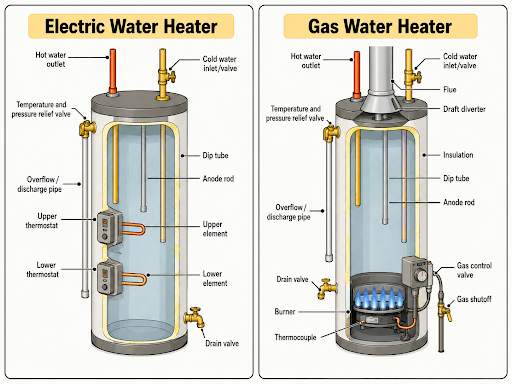
Gas vs. electric water heaters is a common comparison for Indianapolis homeowners and property managers. Most people look at fuel cost, hot water demand, and installation price first. Those things matter. But water quality matters too.
Indianapolis hard water can affect both gas and electric units. Minerals in the water can collect inside the tank, around heating parts, and along plumbing connections. Over time, that buildup can reduce performance and increase maintenance needs.
The right water heater matters. So does the water running through it.
Gas vs Electric Water Heaters: The Basic Difference
Gas and electric water heaters do the same basic job. They heat water and store it for showers, sinks, dishwashers, laundry, and daily building use.
The difference is how they create heat.
A gas unit uses a burner. An electric unit uses heating elements. That difference affects recovery time, installation needs, operating cost, and service work.
For homes, the choice often comes down to comfort and utility access. For commercial buildings, the choice can affect tenant satisfaction, maintenance schedules, and long-term equipment costs.
What is a Gas Water Heater?
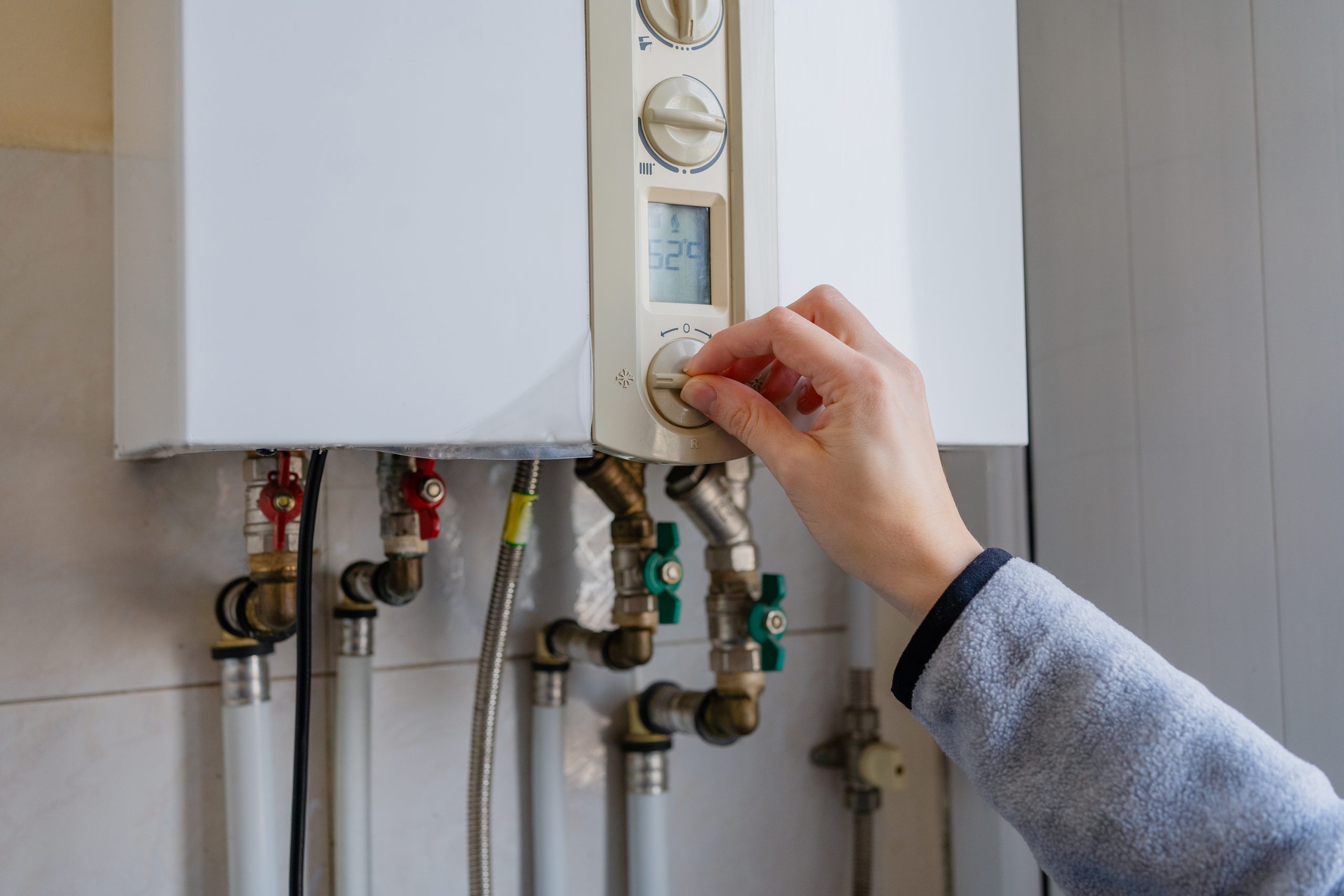
What is a gas water heater? It is a water heater that uses natural gas or propane to heat water inside a storage tank.
A burner sits below the tank. When the thermostat calls for heat, the burner fires and warms the water. Exhaust gases leave through a vent system.
Gas water heaters are common in homes and commercial buildings with existing gas lines. They can recover hot water faster than many standard electric models. That matters when several fixtures need hot water close together.
Hard water can create problems with water heaters. Minerals can settle at the bottom of the tank, close to the burner area. That can make heat transfer less direct and force the system to work harder.
Pros and Cons of a Gas Water Heater
The pros and cons of gas water heaters depend on the property, usage, and local utility rates.
Pros:
- Gas units often heat water faster than electric units. That can help larger households, offices, salons, restaurants, and multi-unit buildings.
- They may cost less to run in areas where natural gas rates are lower than electric rates.
- They can keep up better during high-demand periods.
Cons:
- They need a gas line and proper venting.
- Installation can cost more if the building does not already have gas service.
- They need combustion safety checks.
Scale buildup can collect in the tank and reduce performance over time.
A gas water heater can be a strong choice when demand is high. But in Indianapolis, hard water should be part of the planning process.
What is an Electric Water Heater?
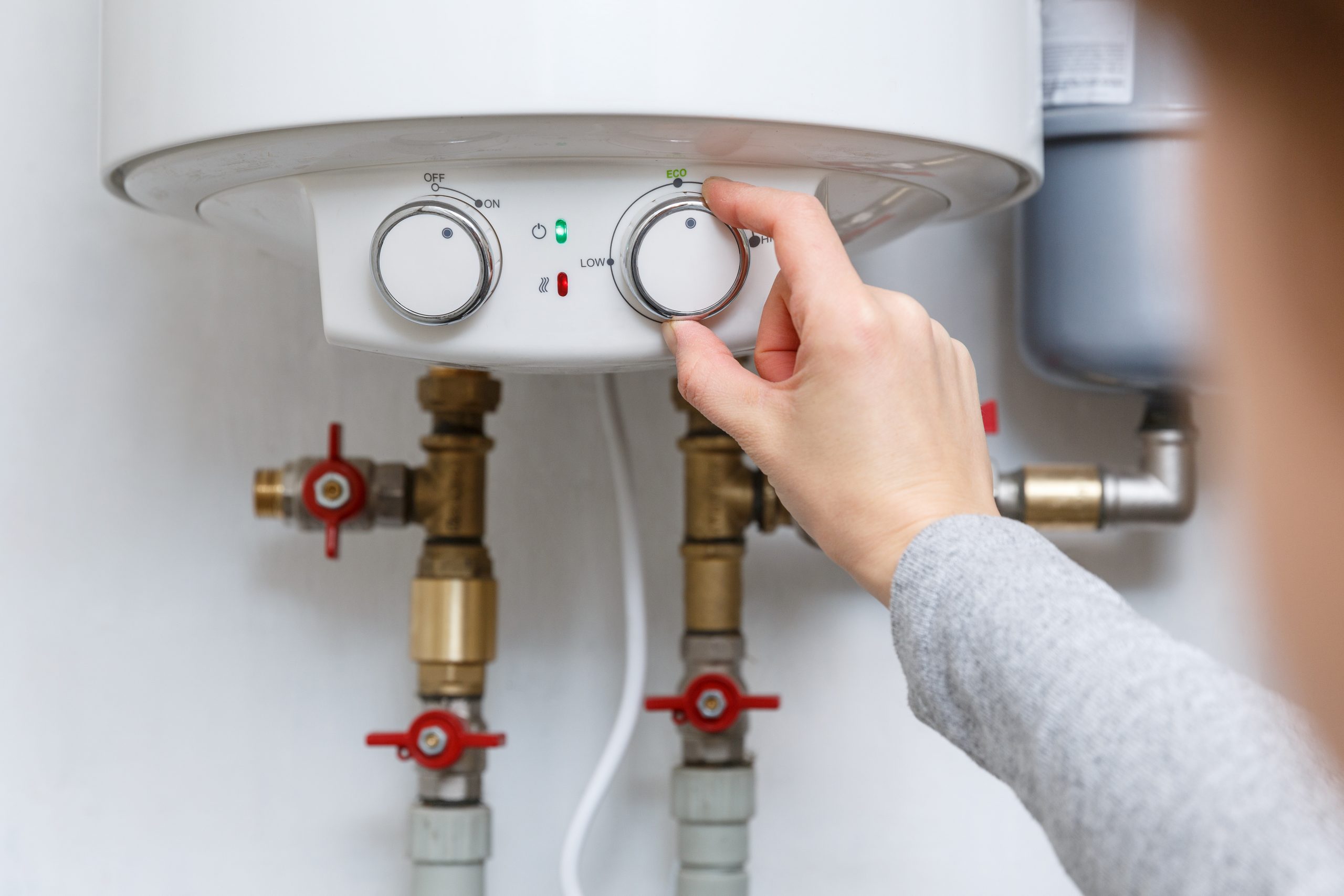
What is an electric water heater? It is a water heater that uses electric heating elements inside the tank to warm the water.
Most standard electric units have one or two heating elements. These parts sit in direct contact with the water. When the thermostat calls for heat, the elements turn on.
Electric water heaters are common where gas service is not available. They can be simpler to install because they do not need venting. They also avoid combustion-related service needs.
But hard water can be rough on electric units. Minerals can collect around the heating elements. That buildup can slow heat transfer, cause uneven heating, and shorten part life.
Pros and Cons of an Electric Water Heater
The pros and cons of electric water heaters often come down to installation, utility rates, and water quality.
Pros:
- Electric units do not need gas lines or vent pipes.
- They can fit well in homes or buildings where gas access is limited.
- They have fewer combustion-related safety concerns.
- They may cost less to install in some settings.
Cons:
- They may recover hot water more slowly than gas units.
- Operating costs can be higher, depending on electric rates.
- Heating elements can suffer when hard water minerals build up.
- Sediment and scale can lead to more service calls.
Electric vs. gas water heaters is not a simple choice. A smaller home may do well with electric. A commercial space with heavy hot water use may need gas or a larger system design. Water quality can change the long-term math for both.
How Indianapolis Hard Water Affects Water Heaters
Hard water and water heaters are a bad mix when minerals are left unmanaged.
Hard water contains dissolved minerals, mainly calcium and magnesium. When water heats, those minerals can leave deposits behind. That deposit is called scale.
Scale can collect inside tanks, on heating elements, at fixtures, and in plumbing lines. In a water heater, it can reduce heat transfer and make the unit work longer to do the same job.
For homeowners, that can mean slower hot water and more maintenance and ultimately a system failure.
For property managers and facilities teams, it can mean tenant complaints, service calls, and earlier equipment replacement.
Superior Water Treatment helps address these issues with water treatment systems built for local water conditions. Their water treatment services support homes, offices, restaurants, multi-unit buildings, and other Indianapolis-area properties.
Their systems use premium components, including high-efficiency Clack valve systems and 10% crosslinked resin. That resin has 25% more crosslinking than standard 8% resin, which helps improve durability under regular use.
Scale Buildup in Gas Water Heaters
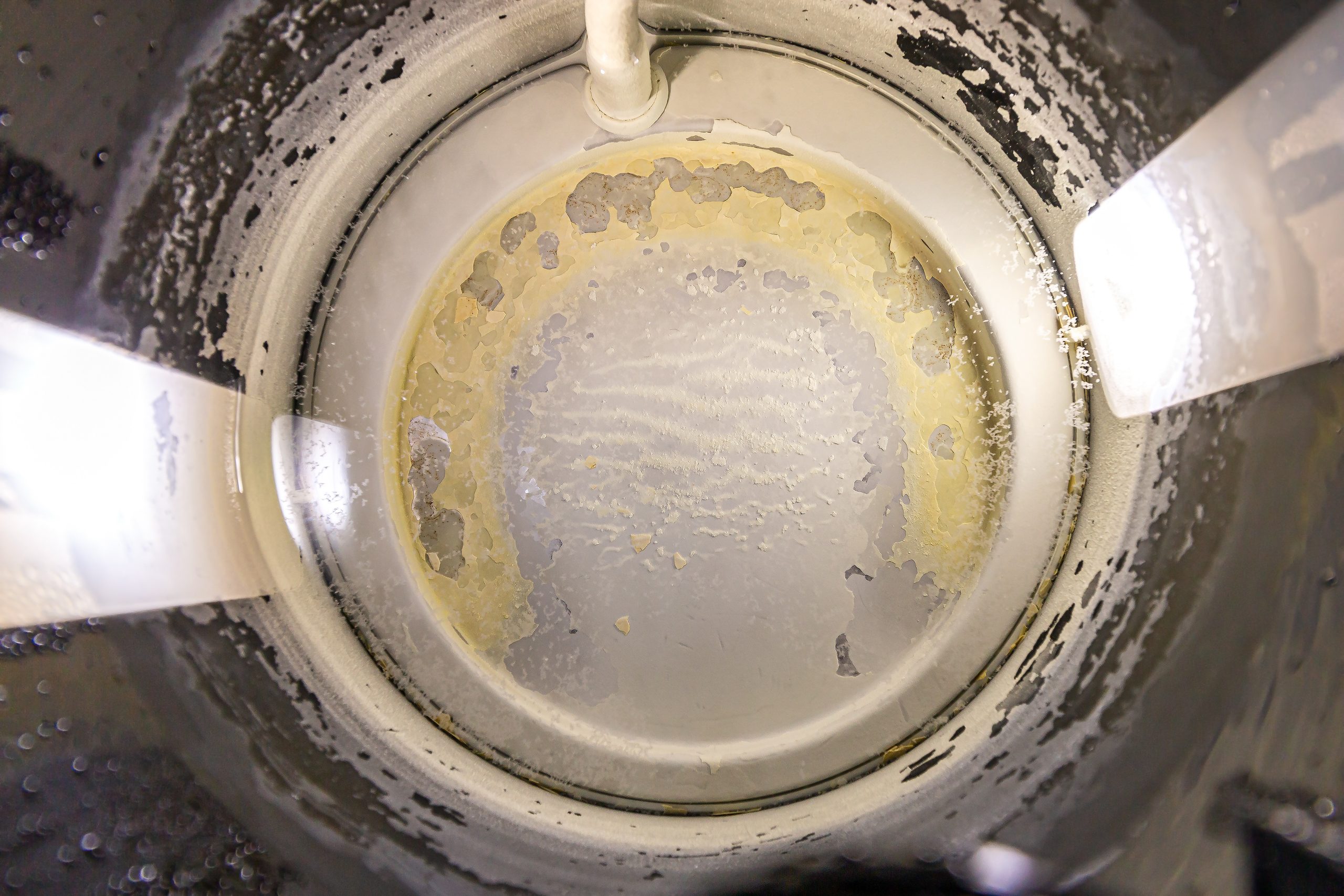
Water heater scale buildup often settles at the bottom of a gas water heater tank.
That matters because the burner heats the tank from below. If sediment and scale sit between the burner and the water, heat transfer can suffer. The unit may run longer. It may make popping or rumbling sounds as trapped water moves through mineral deposits.
Those sounds are not just annoying. They can signal that the tank has built up inside.
In commercial settings, the issue can grow faster because hot water demand is higher. A restaurant, office building, apartment property, or medical space may use far more hot water than a typical home.
That makes preventive water treatment worth discussing before problems pile up.
Mineral Buildup Around Electric Heating Elements
Electric water heaters have a different weak spot. Their heating elements sit inside the tank, directly in the water.
When hard water minerals collect on those elements, they create a barrier. The element has to work through the buildup to heat the water. That can increase stress on the part and result in failure of the heater.
In some cases, mineral buildup can lead to uneven heating, slower recovery, or element failure. Replacing heating elements may solve the immediate issue, but it does not address the water quality behind it.
That is why a water softener for water heater protection can be a practical step. It helps reduce the minerals that create scale in the first place.
Why Indianapolis Water Hardness Matters
Indianapolis water is hard enough that homeowners and commercial property teams should factor it into equipment decisions.
Hard water does not always cause instant failure. That is part of the problem. The damage can be gradual. You may notice small changes first, such as longer wait times for hot water, more fixture buildup, or more frequent service needs.
For commercial properties, small issues can turn into real costs. Water heaters that work harder can affect operating expenses. A building with inconsistent hot water can frustrate tenants, staff, or customers.
A better plan is to match the water heater choice with the right water treatment.
That may include a water softener, filtration system, salt delivery, and a maintenance plan from a local water treatment company.
FAQs about Gas and Electric Water Heaters
Gas and electric water heaters both have advantages, but Indianapolis hard water can affect either type over time. These common questions can help homeowners, property managers, and facilities teams compare their options and understand when water treatment should be part of the decision.
Is a Gas or Electric Water Heater Better?
A gas water heater is often better for faster hot water recovery, while an electric water heater may be simpler to install without a gas line. The best choice depends on fuel availability, demand, installation cost, utility rates, and water quality.
Are Gas Water Heaters Cheaper to Run Than Electric Water Heaters?
Gas water heaters are often less expensive to operate where natural gas rates are favorable, but total cost depends on local utility rates, equipment efficiency, installation requirements, and usage. Water quality should also be considered because scale buildup can affect long-term performance.
Should I Install a Water Softener Before Replacing My Water Heater?
In Indianapolis, it is worth considering. If hard water has caused scale buildup in your current water heater, adding a water softener before or during replacement can help protect the new system and reduce future maintenance problems.
Protect Your Water Heater With Local Water Treatment
A water heater is easier to protect before scale becomes a major problem.
Superior Water Treatment provides water softeners, filtration systems, rentals, salt delivery, water heaters, and maintenance plans for Indianapolis-area homes and commercial properties. The goal is simple. Reduce the minerals that create scale and help your equipment last longer with fewer avoidable service issues.
For commercial properties, that can support better uptime, more predictable maintenance, and fewer hot water complaints. For homeowners, it can help protect appliances, fixtures, and plumbing.
Need help deciding between gas vs. electric water heaters and water treatment? Contact Superior Water Treatment to schedule a local water assessment. Ask about water softener options, salt delivery, water heaters and service plans that fit your property.
You can also contact Superior Water if you want help choosing water treatment services before replacing or servicing your water heater.