Commercial Water Softener Maintenance Guide
Commercial water softener maintenance helps Indianapolis facilities keep treatment equipment operating properly, identify developing issues, and reduce the risk of hard water returning unexpectedly. For apartment communities, hotels, restaurants, healthcare facilities, offices, and other high-use properties, routine maintenance is especially important because water demand can place greater stress on valves, resin, brine systems, and regeneration settings.
A practical maintenance plan combines professional system testing with simple checks facility teams can perform between service visits. The right schedule depends on water hardness, usage, system capacity, equipment age, and the operational impact of downtime.
What Does Commercial Water Softener Maintenance Include?
Commercial water softener maintenance involves checking the equipment, testing system performance, and correcting problems before they affect treated water or facility operations. Effective maintenance should look beyond whether the system appears to be running.
Water Hardness And System Performance Testing
Treated water should be tested for hardness to confirm the softener is performing as expected. Hardness breakthrough may indicate incorrect settings, excessive demand, resin issues, or another system problem.
Control Valve And Regeneration Inspection
The control valve should be inspected for proper programming and regeneration. Technicians may review flow settings, cycle timing, seals, and other components that affect system operation.
Brine Tank And Salt System Inspection
Salt levels, brine production, buildup, and related components should be checked. Consistent salt delivery can also help commercial facilities avoid unexpected shortages.
Resin And Internal Component Evaluation
The resin condition may be evaluated when performance testing indicates a problem. Resin replacement is not automatically required during every service visit.
This combination creates a practical water softener maintenance checklist rather than relying on visual inspection alone.
Signs Your Commercial Water Softener Needs Service
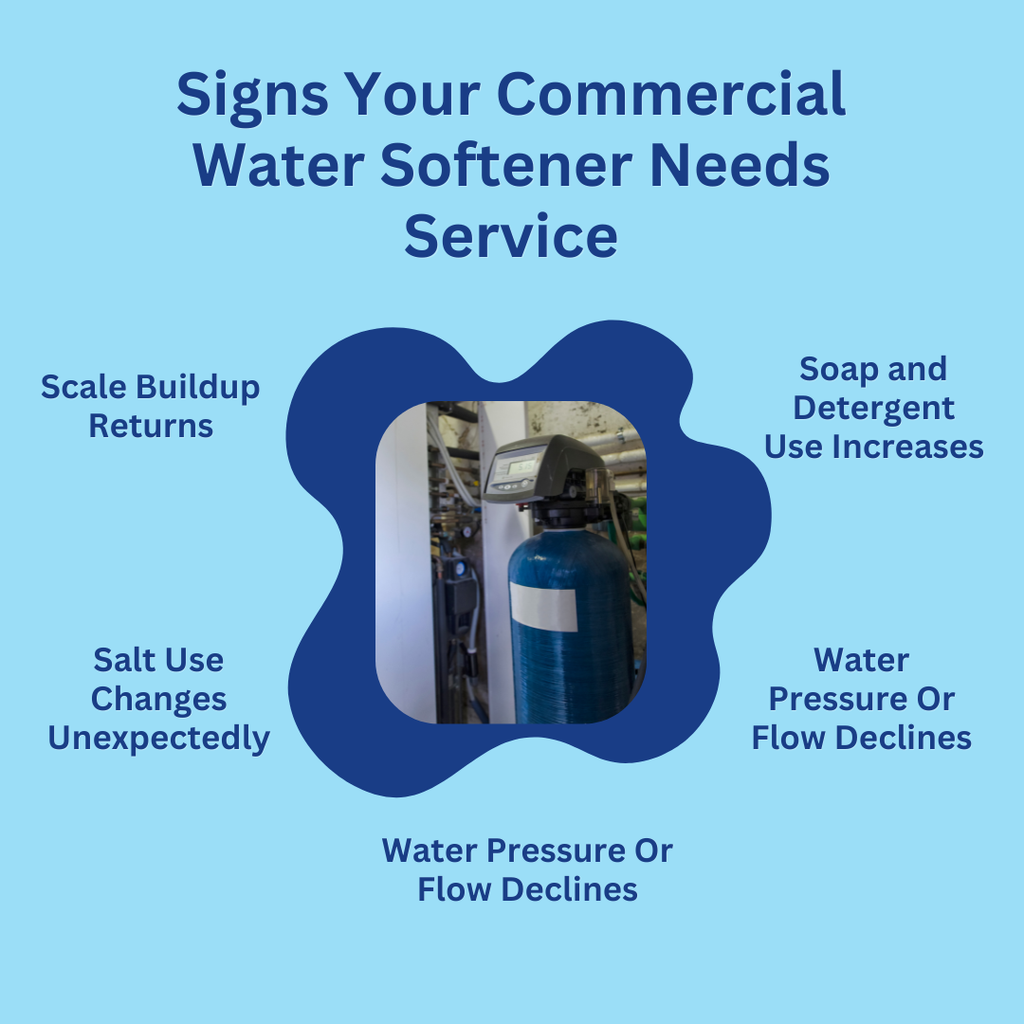
A commercial water softener may need service when hard water symptoms return, salt use changes unexpectedly, or the system no longer regenerates consistently. Facility teams should not rely on one symptom alone because water demand, plumbing changes, salt levels, and equipment use can cause similar problems.
Scale Buildup Returns
New mineral deposits on fixtures or water-using equipment may indicate that hardness is passing through the system.
Soap and Detergent Use Increases
Harder water can affect how soaps and detergents perform. A noticeable change may justify hardness testing.
Salt Use Changes Unexpectedly
A sudden increase or decrease in salt consumption can indicate programming problems, changing water demand, leaks, or regeneration issues.
Water Pressure Or Flow Declines
Reduced flow may be related to the softener, but plumbing restrictions and other building-system issues can produce similar symptoms.
The System Regenerates At The Wrong Time
Unexpected or unusually frequent regeneration may indicate incorrect programming or a change in facility demand.
Identifying the cause requires looking at the system as a whole rather than assuming every symptom has the same solution.
Commercial Water Softener Maintenance Schedule
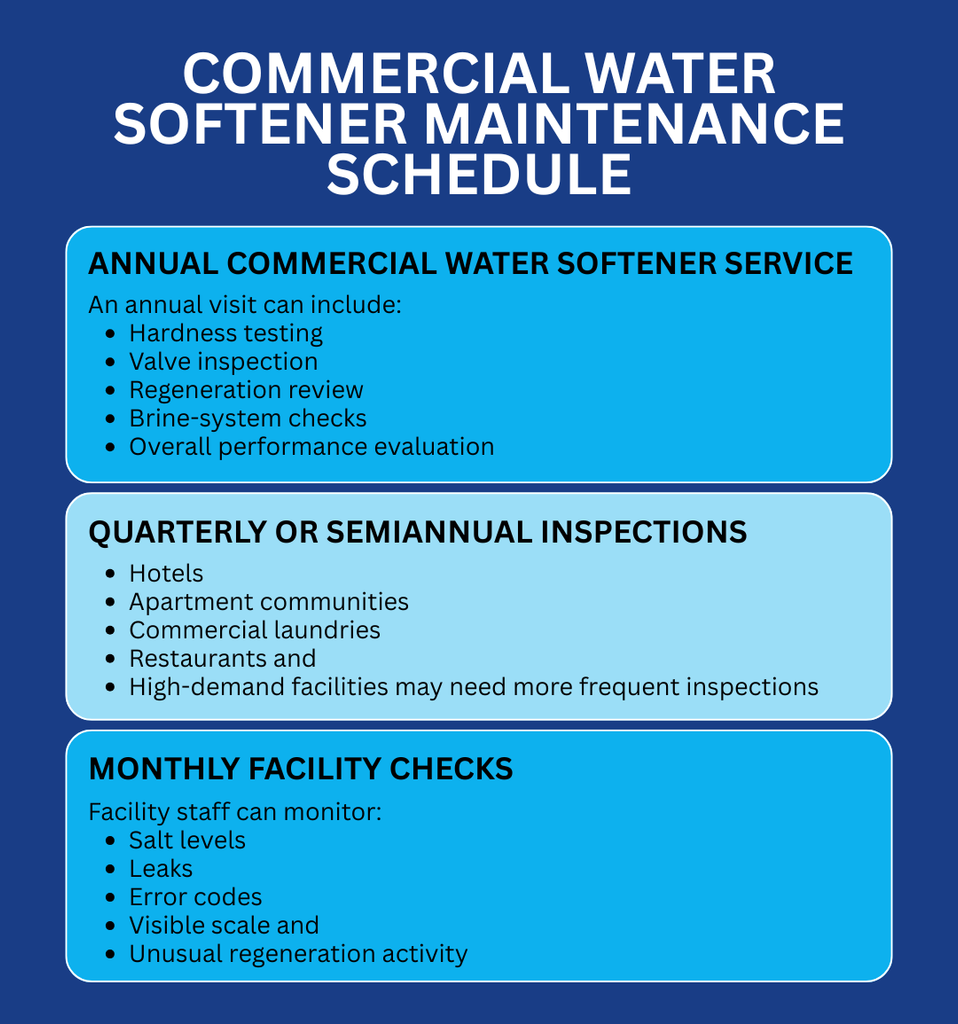
Many commercial water softeners should receive professional service at least annually, while high-use facilities may benefit from inspections more often. The right water softener maintenance schedule should reflect operating conditions instead of following one universal calendar. Superior Water Treatment’s current guidance also recommends annual servicing for water softeners.
Annual Commercial Water Softener Service
An annual visit can include hardness testing, valve inspection, regeneration review, brine-system checks, and an overall performance evaluation.
Quarterly Or Semiannual Inspections
Hotels, apartment communities, commercial laundries, restaurants, and other high-demand facilities may need more frequent inspections depending on usage and downtime risk.
Monthly Facility Checks
Facility staff can monitor salt levels, leaks, error codes, visible scale, and unusual regeneration activity.
Maintenance After Water Demand Changes
A change in occupancy, operating hours, equipment, or facility usage may alter system demand. Settings and capacity should be reviewed when conditions change significantly.
The best approach to maintenance on water softener systems is therefore based on actual demand and performance.
Hard Water Damage To Commercial Equipment
Hard water can leave scale inside commercial equipment, restrict heat transfer, and contribute to more frequent cleaning or component wear. The severity depends on water hardness, temperature, usage, and the type of equipment involved.
Boilers And Commercial Water Heaters
Scale may form on heat-transfer surfaces, which can make equipment work harder and contribute to service requirements over time.
Restaurant And Foodservice Equipment
Hardness minerals can affect dish equipment, fixtures, hot-water systems, and other water-using kitchen components.
Laundry And Housekeeping Equipment
Hard water may increase detergent requirements and contribute to mineral buildup in equipment exposed to frequent water use.
Plumbing Fixtures And Building Systems
Scale can accumulate on fixtures, valves, piping, and other components throughout a property.
Properly sized water softeners may help limit these issues, but regular testing is important to confirm the system continues to operate as intended.
How To Reduce Commercial Water Softener Problems
Reducing water softener problems starts with correct system sizing, consistent monitoring, adequate salt, and maintenance based on actual usage.
Facility teams can help by:
- Keeping the brine tank properly supplied
- Watching for leaks or error codes
- Tracking unusual changes in salt consumption
- Testing treated water when hard water symptoms return
- Scheduling professional inspections
- Reviewing system settings when water demand changes
The maintenance of a water softener system serving a busy hotel may differ significantly from maintenance for a smaller office.
For broader facility needs, explore Superior Water Treatment’s commercial water treatment services.
FAQs About Commercial Water Softener Maintenance
Here are answers to some common questions about water softener maintenance:
How Often Should A Commercial Water Softener Be Serviced?
Most commercial water softeners should be professionally serviced at least once per year, while high-use facilities may need quarterly or semiannual inspections. The correct schedule depends on water hardness, daily usage, system capacity, salt consumption, equipment age, and the operational impact of unexpected downtime.
How Do I Know If My Commercial Water Softener Is Working?
Test the treated water for hardness and watch for returning scale, increased detergent use, or changes in salt consumption. A system may appear to operate normally while allowing hardness breakthrough, so professional testing provides a more reliable assessment than visual inspection alone.
Why Is My Commercial Water Softener Using So Much Salt?
Excess salt use may be caused by incorrect settings, frequent regeneration, leaking components, increased water demand, or an undersized system. A service technician can review water usage, hardness levels, valve programming, and brine-system operation to identify the likely cause.
Can A Commercial Water Softener Be Maintained In-House?
Facility staff can monitor salt levels, leaks, error codes, and visible hard water symptoms, but mechanical inspection and performance testing should generally be handled by a qualified service provider. Professional maintenance can identify valve, resin, programming, or brine-system problems that routine checks may miss.
Schedule Commercial Water Softener Maintenance
Routine service can help facility teams identify performance problems before they develop into larger operational concerns. Superior Water Treatment works with Indianapolis-area commercial properties to support water softeners, salt supply, and ongoing system performance.
If you are seeing returning scale, unusual salt consumption, regeneration problems, or simply need an annual inspection, schedule a maintenance visit with our local team. Consistent commercial water softener maintenance can help support reliable treatment, protect water-using equipment, and give facility managers better visibility into system performance.