
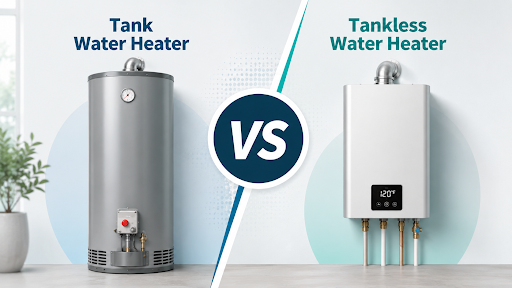
Tankless vs. tank water heaters is a practical decision for commercial buildings. It affects upfront cost, hot water recovery, space planning, maintenance, and tenant or customer satisfaction.
But the heater is only part of the equation.
In Indianapolis-area buildings, hard water can change how both systems perform over time. Scale can collect inside tanks, fixtures, lines, and tankless heat exchangers. That can lead to slower performance, more service calls, and higher long-term costs.
For offices, restaurants, apartments, gyms, salons, and medical spaces, the right choice is not only between a tank and a tankless water heater. It is also how you protect the system after installation.
How Do Tank Water Heaters Work?
How do tank water heaters work? A tank water heater fills a storage tank with water and heats it using gas or electricity. The tank keeps that water hot until someone opens a faucet, shower, or commercial fixture.
Once hot water leaves the tank, cold water enters. The system then heats the new water.
Tank units come in many sizes. Commercial properties may use one large tank, multiple tanks, or a setup with storage and recirculation.
Tank water heaters are common because they are familiar and often easier to service. They can also handle large stored volumes when the building needs hot water at predictable times.
Hard water still creates risk. Minerals can settle at the bottom of the tank. That buildup can reduce performance and make the system work harder.
Pros and Cons of Tank Water Heaters
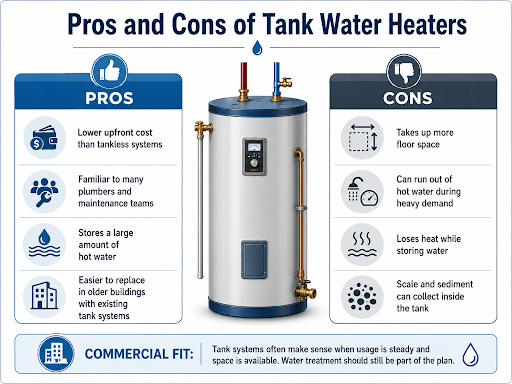
Tank water heaters have clear strengths.
Pros:
- They often cost less upfront than tankless systems.
- They are familiar to many plumbers and maintenance teams.
- They can store a large amount of hot water.
- They may be easier to replace in older buildings with existing tank systems.
Cons:
- They take up more floor space.
- They can run out of hot water during heavy demand.
- They can lose heat while storing water.
- Scale and sediment can collect inside the tank.
For commercial buildings, tank systems often make sense when usage is steady and space is available. But water treatment should still be part of the plan.
Tank Water Installation and Maintenance
Tank water heater installation depends on system size, fuel type, venting, drainage, space, and code requirements.
A commercial tank water heater may need floor clearance, combustion air, expansion control, drain access, and safe venting. Electric units need proper electrical capacity.
Maintenance matters too. Commercial tanks should be inspected, flushed when appropriate, and checked for signs of sediment, corrosion, leaks, or performance changes.
In hard-water areas, scale can build faster. That can shorten the useful life of parts and raise service needs.
A local water treatment company can test the water and recommend the right treatment plan before tank water heater installation. That step helps protect the investment from day one.
How Do Tankless Water Heaters Work?
How do tankless water heaters work? A tankless unit heats water as it passes through the system. When someone turns on a hot water tap, the unit senses flow and activates the burner or electric heating system.
The water passes through a heat exchanger and leaves the unit hot.
A commercial tankless water heater may use one larger unit or several units linked together. That setup can help meet demand in buildings with heavy or changing hot water use.
Tankless systems do not store a full tank of hot water. That can save space. It can also reduce standby energy use because the system is not keeping stored water hot all day.
Tankless systems are sensitive to water quality. A tankless water heater with hard water can develop scale inside the heat exchanger if minerals are not controlled.
Pros and Cons of Tankless Water Heaters
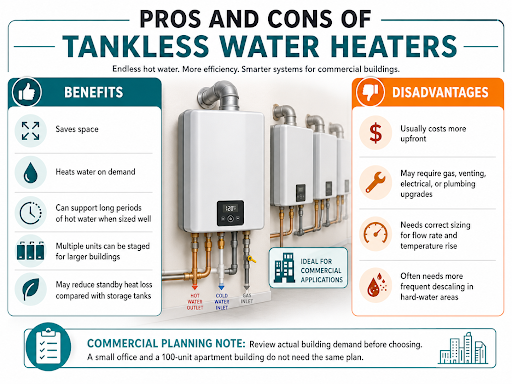
Tankless water heaters’ pros and cons matter more in commercial buildings because demand is higher.
The benefits of tankless water heater systems include:
- They save space.
- They heat water on demand.
- They can support long periods of hot water when sized well.
- Multiple units can be staged for larger buildings.
- They may reduce standby heat loss compared with storage tanks.
The disadvantages of tankless water heaters include:
- They usually cost more upfront.
- They may require gas, venting, electrical, or plumbing upgrades.
- They need correct sizing for flow rate and temperature rise.
- They often need more frequent descaling in hard-water areas.
The pros and cons of tankless water heaters should be reviewed with actual building demand where available, or projected demand based on existing comparables for new construction. A small office and a 100-unit apartment building do not need the same plan.
Tankless Water Installation and Maintenance
Tankless water heater installation is more involved than many building owners expect.
The system must be sized for peak flow. That means looking at the number of fixtures, expected simultaneous use, incoming water temperature, fuel supply, venting, and recirculation needs.
A commercial tankless water heater may also need water treatment, isolation valves, condensate handling, and a service plan.
Tankless maintenance should include regular inspection and flushing or descaling based on manufacturer guidance and water conditions. In Indianapolis, tankless water heater hard water issues can show up as reduced flow, longer heating times, error codes, or more frequent service needs.
Water treatment services can help reduce scale before it reaches the heater. That can lower maintenance risk and support steadier performance.
Why Commercial Water Treatment Matters Before Heater Selection
Water treatment should come before the final heater decision, especially in hard-water areas.
Hard water contains minerals that can collect inside water heaters. Tank systems can collect sediment in the storage tank. Tankless systems can collect scale inside the heat exchanger.
Both problems can affect performance.
For commercial buildings, that can mean more than a minor annoyance. It can affect daily operations, tenant satisfaction, appliance life, and service costs.
Superior Water Treatment helps Indianapolis-area businesses address hard water before it damages equipment. Their systems use high-efficiency Clack valve systems and 10% crosslinked resin. That resin has 25% more crosslinking than standard 8% resin, which helps improve durability under regular use.
Water treatment does not replace good heater sizing. But it can help protect the system you choose.
Best Fit by Commercial Property Type
Different buildings need different water heaters. Here are some of the best fit suggestions for different types of commercial properties:
- Restaurants often need high hot water output during rush periods. A tankless system or hybrid setup may work well, but only with proper sizing and water treatment.
- Apartment buildings need steady hot water across many units. Multiple tank units, tankless banks, or storage-assisted systems may be considered. Tenant complaints can rise quickly when demand is miscalculated.
- Gyms and fitness centers need hot water during peak shower times. Tankless may save space, but peak flow must be calculated carefully.
- Office buildings may have lighter hot water demand. A tank system can be practical and cost-effective.
- Salons, spas, and medical spaces often need steady hot water and clean equipment performance. Hard water control matters because scale can affect more than the heater.
- Hotels and extended-stay properties need reliability. A combined system with storage, redundancy, and water treatment may reduce downtime risk.
The best choice depends on the use case for the heater.
FAQs about Tank and Tankless Water Heaters
Choosing between tankless vs. tank water heaters can feel simple at first, but commercial buildings need a closer look. Hot water demand, peak usage, space, fuel access, and Indianapolis hard water can all affect long-term performance. These FAQs can help business owners, property managers, and facilities teams make a more practical decision.
Is a Tankless Water Heater Better Than a Tank Water Heater?
The better option depends on hot water demand, building layout, available space, fuel type, installation budget, and maintenance needs. Tankless systems can save space and provide hot water on demand, while tank systems may be simpler and more cost-effective upfront. In hard-water areas like Indianapolis, both systems should be evaluated with water treatment in mind.
Should a Commercial Building Install a Water Softener Before a Tankless Water Heater?
In many Indianapolis-area commercial buildings, yes. A water softener can help reduce scale buildup before water reaches the tankless system. This is especially important for apartments, restaurants, gyms, hotels, and other high-use properties.
Does Hard Water Affect Tankless Water Heaters?
Yes. Hard water can cause scale buildup inside tankless heat exchangers, which may reduce performance and increase maintenance needs. Commercial buildings with tankless systems often benefit from water softening and scheduled service to help protect equipment.
Not Sure Which System Fits Your Business?
A water heater problem can disrupt a business quickly. Cold water complaints do not wait for a convenient time.
Superior Water Treatment can help you look at heater type, water quality, and ongoing maintenance together. Their water treatment services support commercial water heaters, plumbing systems, and equipment that face daily hard-water exposure.
If you are choosing between tankless vs. tank water heaters, contact Superior Water to schedule a local water assessment. Ask about water heaters, commercial water softeners, filtration systems, salt delivery, and maintenance plans for your building.