
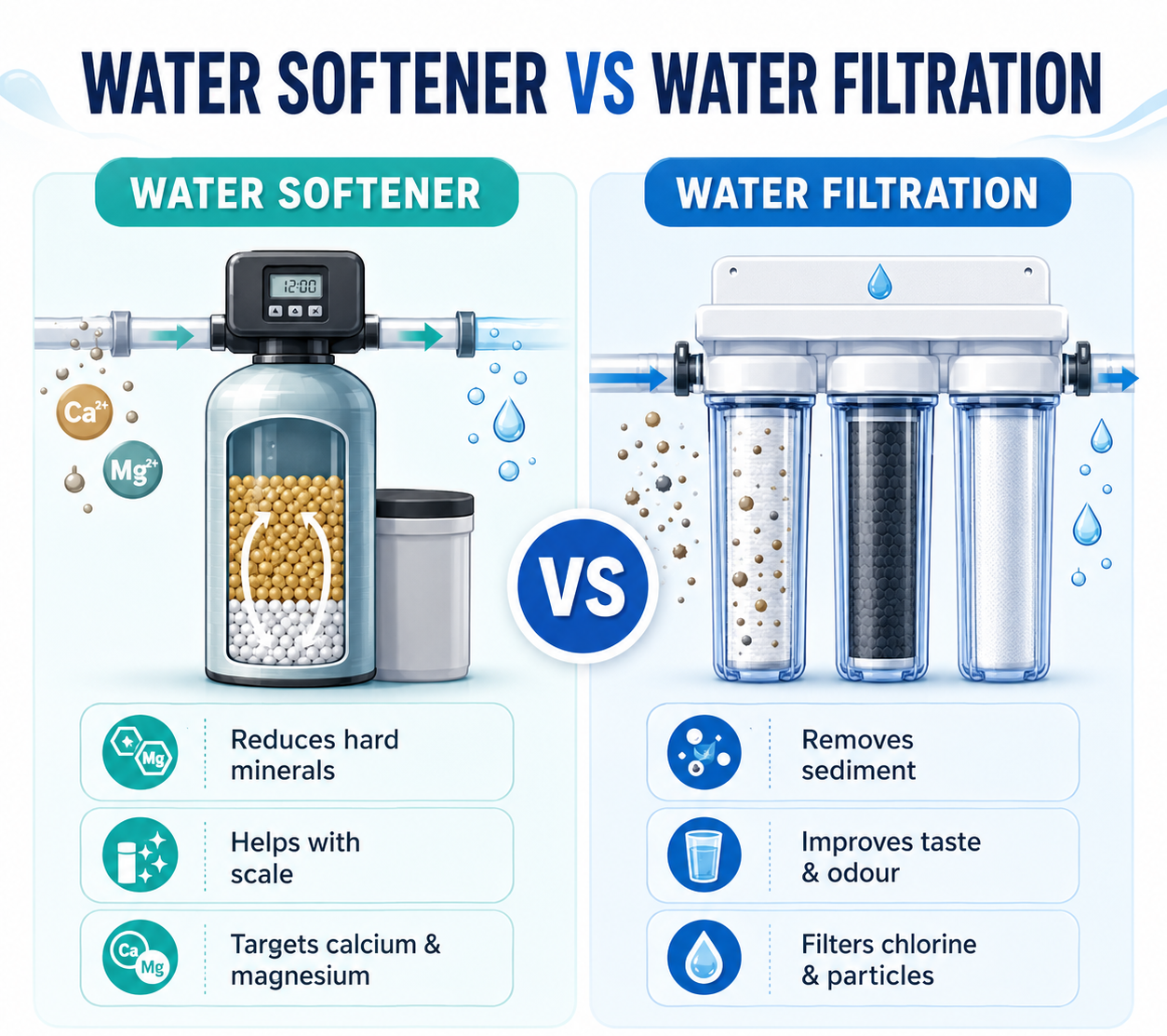
Water filtration vs. water softeners is a common comparison, but these systems do different jobs. A water softener treats hardness. A water filtration system targets taste, odor, sediment, and certain unwanted substances.
That difference matters because hard water and poor-tasting water are not the same problem.
In Indianapolis, many homes and commercial properties deal with hard water. Some also deal with chlorine taste, cloudy water, sediment, or odor. Choosing the right system starts with knowing what is in your water.
Understanding Water Softeners

Understanding water softeners starts with hardness minerals. Hard water contains calcium and magnesium. These minerals can build up inside plumbing, fixtures, appliances, and commercial equipment.
Water softeners reduce those minerals. For homes, that may mean better soap performance, fewer spots, and less buildup. For businesses, it can mean fewer maintenance calls, longer equipment life, and steadier water quality.
What Do Water Softeners Do?
What do water softeners do? They remove hardness minerals through ion exchange.
Water passes through a resin tank. Resin beads attract calcium and magnesium. The system replaces those minerals with sodium or potassium ions. That is what turns hard water into softened water.
So, what does a water softener do in daily use?
It can help reduce scale, protect water heaters, improve soap lather, reduce spotting, and lower mineral buildup on fixtures. It does not remove chlorine, sediment, bad taste, or odors. That is where water filtration comes in.
Superior Water Treatment uses high-efficiency Clack valve systems and 10% crosslinked resin. That resin has 25% more crosslinking than standard 8% resin, which can result in longer system life and improved softener performance.
Signs You Need a Water Softener

The signs you need a water softener are usually easy to spot.
You may notice:
- White scale on faucets or showerheads.
- Spots on dishes and glassware.
- Soap that does not lather well.
- Dry-feeling skin or hair.
- Stiff laundry.
- Water heater issues.
- Appliances are wearing out early.
For commercial properties, signs may include equipment scale, clogged fixtures, tenant complaints, or more service calls. Restaurants, apartments, gyms, salons, and offices can all feel the cost of hard water.
Understanding Water Filtration Systems

Water filtration systems reduce specific water quality concerns.
A filter may target sediment, chlorine taste, odors, cloudiness, iron, sulfur smell, or other substances, depending on the system type.
Some filters treat the whole building. Others treat one point of use, such as a kitchen sink. The right choice depends on test results and where the problem appears.
A water filter system vs. water softener comparison should never stop at price. The better question is what problem the system is meant to solve.
What Do Water Filters Do?
What do water filters do? They remove or reduce unwanted particles, tastes, odors, or substances from water.
The answer depends on the filter media. Carbon filters can reduce chlorine taste and odor. Sediment filters can catch sand, dirt, and particles. Other filters may target iron, sulfur, or specific concerns.
So, what does a water filter do that a softener does not?
It can improve taste, smell, clarity, and drinking water quality. But most filters do not soften water unless paired with a softener or built into a larger setup.
That is why water softener vs. filtration system comparisons can be misleading. They are not interchangeable and can be used together.
Signs You Need a Water Filter

A water filter may be the better fit if your issue is not hardness.
Common signs include:
- Water tastes like chlorine.
- Water has an odor.
- Water looks cloudy.
- Sediment appears in sinks or tubs.
- Water stains fixtures.
- Drinking water quality is a concern.
- Staff, tenants, or customers complain about the taste.
In a business, water quality can affect beverages, food prep, customer experience, laundry, cleaning, and equipment performance. A water treatment company should test first and recommend second.
Do I Need a Water Softener or Filter?

The answer depends on the problem.
If your main issue is scale, spots, and poor soap lather, you likely need a softener. If your main issue is taste, odor, sediment, or cloudy water, you likely need filtration.
Some properties need both. That is common when hard water and drinking water concerns happen at the same time.
The water softener or filter decision should always start with testing. Guessing based on symptoms can lead to the wrong system.
When to Choose a Water Softener
Choose a softener when water hardness is the main problem.
That is usually the case if you see scale, fixture buildup, appliance wear, soap issues, or spots on dishes.
A salt-based system is often the strongest option for true softening because it removes calcium and magnesium. It also needs salt. A water softener salt delivery plan can help keep the system running without missed refills.
Superior salt can also help reduce salt quality issues in the brine tank.
When to Choose a Water Filtration System
Choose water filtration when your main issue is taste, odor, sediment, or a specific water quality concern.
A filter can make drinking water more pleasant and help reduce particles or unwanted substances. It may also help protect fixtures and equipment from certain water problems.
But filtration alone will not solve hardness unless the system includes softening as part of the setup.
That is the key point in the water softener system vs. water filtration system comparison.
When to Consider Both
Consider both systems when your water has hardness and quality concerns.
For example, you may have scale on fixtures and a chlorine taste in the water. A softener can treat hardness. A filter can treat taste and odor.
Together, they can improve water for plumbing, appliances, drinking, cleaning, and daily use.
This setup is common in Indianapolis homes and commercial buildings that need more complete water treatment.
Can a Business Need Both Filtration and Softening?
Yes. Many businesses need both.
Restaurants may need softened water for dish washing machines and filtration for better-tasting drinks. Apartment buildings may need softening to reduce scale and filtration to address sediment or odor.
Salons may need softened water for rinsing and filtered water for daily use. Gyms may need both for showers, laundry, water heaters, and drinking stations.
For commercial properties, the wrong setup can cost money. Hardness can strain equipment. Poor taste or odor can lead to complaints. Sediment can clog fixtures and valves.
A properly sized system can help reduce service calls, protect equipment, and improve water quality across the building.
FAQs
Here are answers to common questions about water softeners:
Is a Water Softener the Same as a Water Filter?
No. A water softener removes hardness minerals, while a water filter targets impurities, taste, odor, sediment, or other water quality concerns.
Some homes and businesses benefit from both systems working together.
Does a Water Softener Filter Drinking Water?
No. A standard water softener is not designed to filter drinking water. Its main job is to remove calcium and magnesium that cause hardness.
For taste, odor, sediment, chlorine, or other filtration concerns, a dedicated water filtration system is usually needed.
Do I Need a Water Softener or a Water Filter?
You need a water softener if your main problem is hard water. You need a water filter if your main concern is taste, smell, sediment, or specific water quality issues.
A water test is the best way to choose the right system.
Can I Install Both a Water Softener and a Water Filter?
Yes. A water softener and water filter can be installed together when a property has both hardness and taste concerns.
This setup is common for properties that want better water quality, reduced scale, and added protection for plumbing and equipment.
Get Help Choosing the Right Water Treatment System
Water filtration vs. water softener is not about which system is better. It is about which one – or both – fits your water problem.
Superior Water Treatment can test your water, explain the results, and recommend the right setup for your home or commercial property. That may mean water softeners, water filtration, or both.
Contact Superior Water Treatment to compare options, ask about superior salt, or schedule water softener salt delivery in the Indianapolis area.