
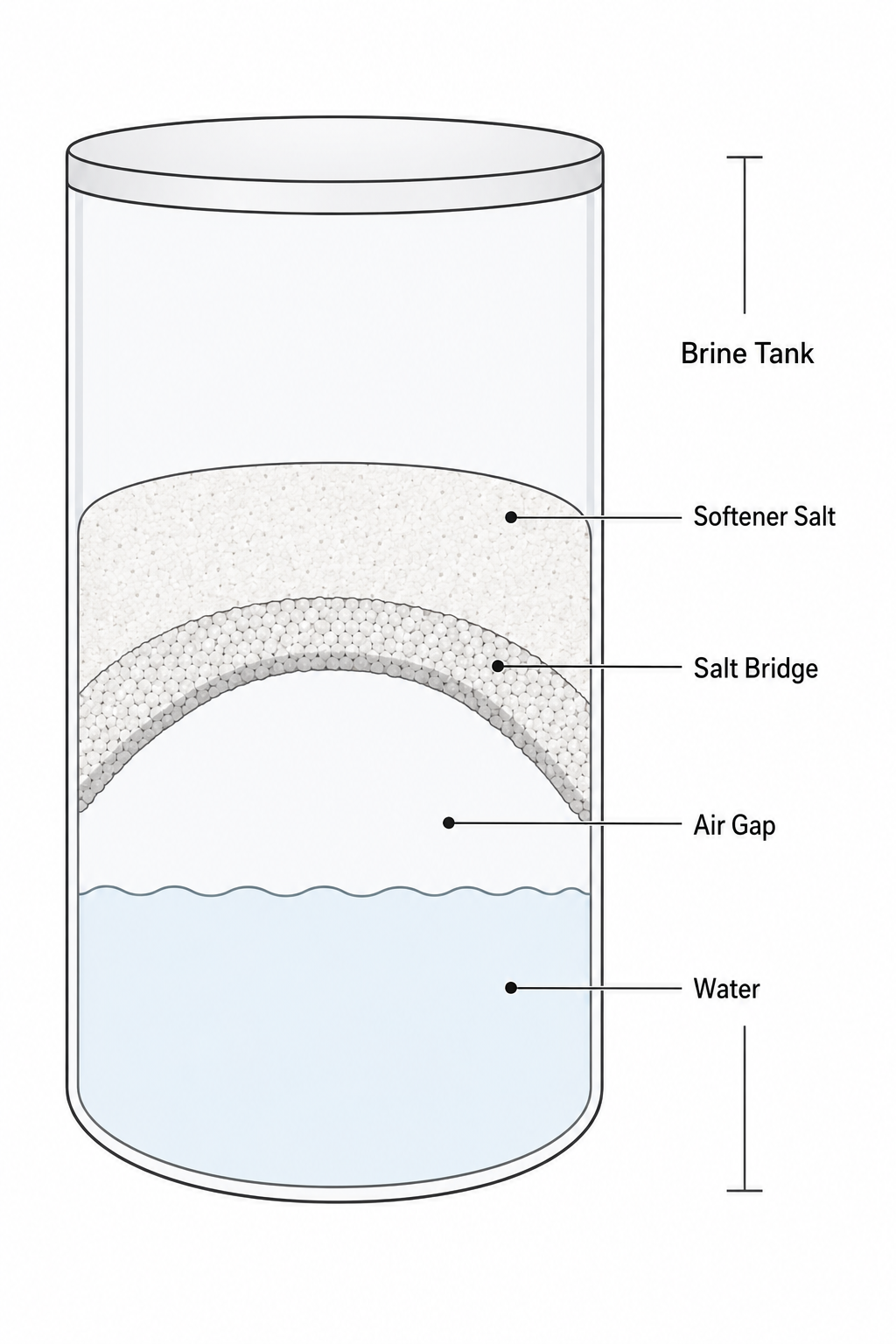
A water softener salt bridge can make your system look full while your water feels hard again. The salt is there, but the softener cannot use it.
A salt bridge forms when salt hardens into a crust inside the brine tank. Below that crust, there may be space between the salt and the water. Without enough dissolved salt, the system cannot make proper brine for regeneration.
That can bring back spots, scale, poor soap lather, and dry-feeling water. For Indianapolis homes and commercial properties, it can also mean more wear on fixtures, appliances, and equipment.
What is a Salt Bridge?
What is a salt bridge? It is a hardened layer of salt inside the brine tank of a water softener.
The salt may look normal from the top. But below the surface, it can form a solid shelf that stops fresh salt from reaching the water.
A brine tank salt bridge is common in humid areas, with low-quality salt, or when the tank stays too full. The softener may still run its cycle, but without enough brine, it cannot clean the resin properly.
What Causes a Salt Bridge in Water Softeners?
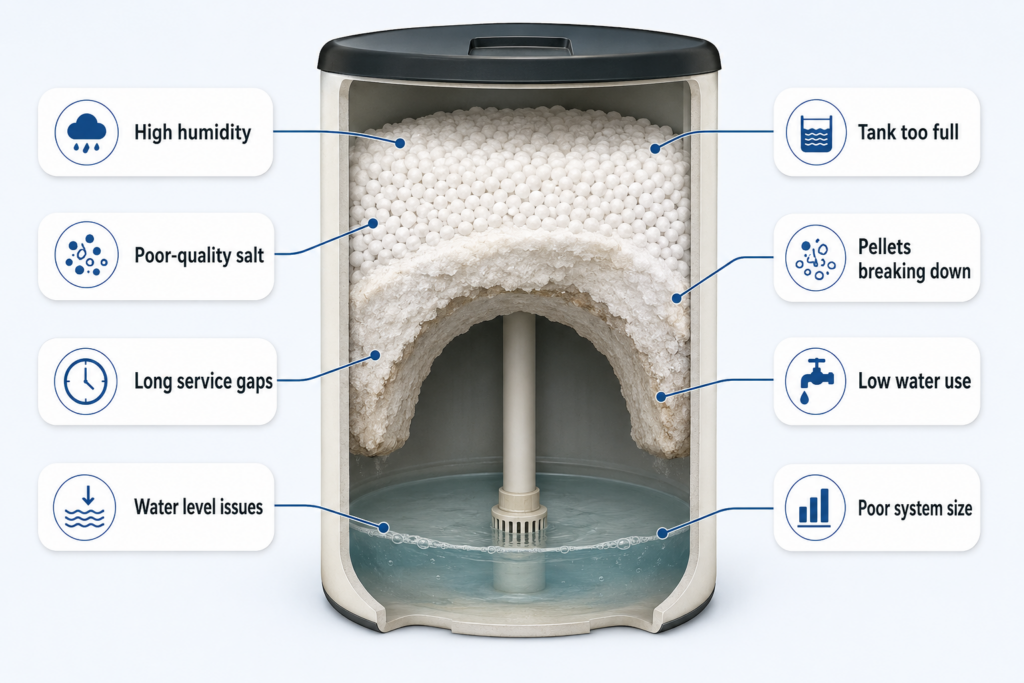
Salt bridging can happen for several reasons.
Humidity is one of the most common causes. Salt can absorb moisture and clump together in a damp basement, utility room, or mechanical area.
Poor-quality salt can also leave residue in the tank. Over time, that can lead to clumping, mush, or a water softener salt blockage.
Keeping the brine tank too full can make bridging more likely. When salt sits packed in the tank too long, it has more time to harden.
Other causes include:
- High indoor humidity.
- Low water use.
- Long gaps between service visits.
- Salt pellets are breaking down.
- Brine tank water level issues.
- A poorly sized system.
Superior salt and routine maintenance can help reduce clumping and tank problems.
What Do Salt Bridges Do?
What do salt bridges do? They stop salt from reaching the water in the brine tank.
Your water softener needs brine to clean hardness minerals from the resin bed. If salt cannot dissolve into the water, the system cannot make a strong enough brine.
The softener may still turn on and regenerate. But the resin will not recharge the way it should.
A salt bridge water softener issue can lead to the following:
- Spots on dishes and glass.
- Scale buildup on fixtures.
- Poor soap and shampoo lather.
- Dry-feeling water.
- Stiff laundry.
- Reduced appliance performance.
- More service calls for commercial equipment.
For businesses, that can become a cost issue. Restaurants, apartments, salons, gyms, and offices all depend on steady water quality.
How to Know If You Have a Salt Bridge in Your Softener
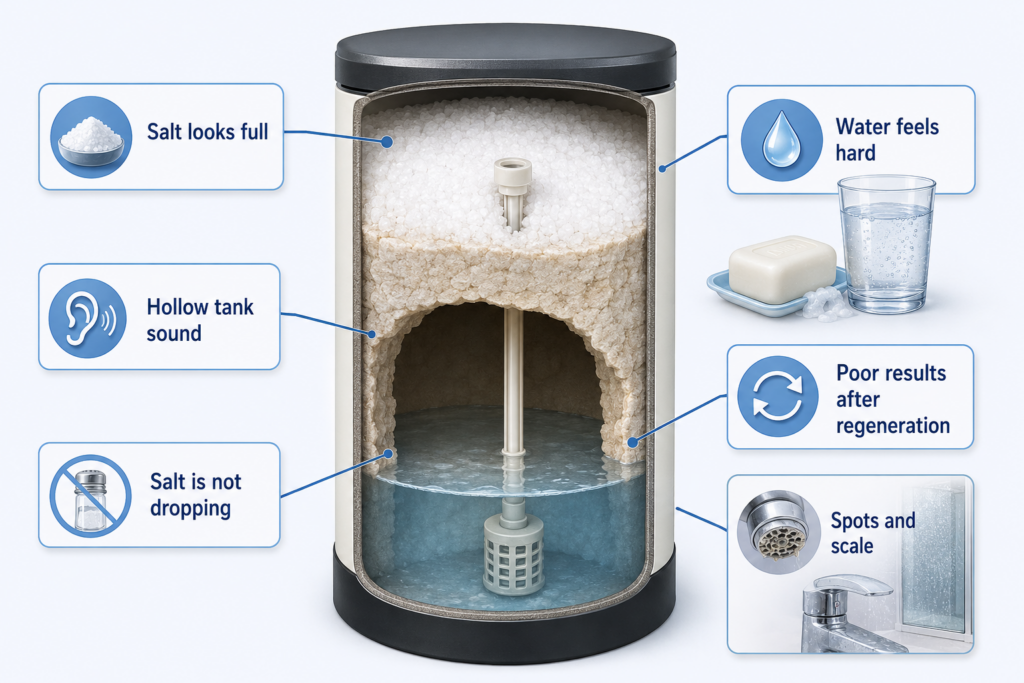
A salt bridge is not always easy to see. The salt level may look fine from above, so watch how the system acts.
The Salt Level Looks Full, but the Water Feels Hard
This is the classic warning sign. The tank looks full, but the water feels hard again.
You may notice spots, scale, or soap that does not lather well. In a commercial property, tenants or staff may report water quality issues.
If the salt is not dropping and the water is hard, you may have a salt bridge.
The Brine Tank Has a Hollow Sound
Tap the outside of the brine tank gently. A hollow sound can mean there is space under the salt crust.
You can also use a broom handle to gently test the salt surface. Do not force it. If the tool hits a hard layer and then drops through, you likely found the bridge.
Never use sharp tools. They can crack the tank or damage parts inside.
Salt Isn’t Dropping Over Time
Salt should go down as the system uses it. If the level stays the same for weeks, something is wrong.
A bridge can make the tank appear full even though the system is not using salt. Other brine tank problems can do this too, so check before the issue gets worse.
Your Water Softener Seems to Regenerate Normally, but Results Are Poor
Water softeners can sound normal even when they are not making proper brine.
If the unit regenerates but your water still feels hard, the resin may not be getting cleaned. A salt bridge is one possible cause.
Other causes include a clogged injector, a failed valve, low salt quality, or a system that needs service.
How to Fix a Salt Bridge
If you are searching for how to fix a salt bridge in a water softener, start with safety. The goal is to break hardened salt without damaging the tank.
Carefully Break Up the Hardened Salt
Use a broom handle or another blunt tool. Gently press into the salt crust.
Work slowly around the tank. Do not stab, hammer, or use metal tools. Brine tanks can crack if hit too hard.
This is the basic process for how to fix a salt bridge. Break the crust so salt can fall back into the water.
Remove Loose Salt Chunks
After breaking the bridge, remove large chunks of hardened salt. Big pieces may not dissolve well and can cause more blockage.
If there is mush, sludge, or dirty salt at the bottom, call a water treatment company for tank cleaning.
Check the Brine Tank Water Level
After the salt breaks apart, check the water level in the brine tank. The tank should have enough water to make brine.
If the tank is dry, overflowing, or looks wrong, there may be a valve or control issue.
Do not keep adding salt if the system is not using it.
Call a Professional if the Problem Returns
If the bridge comes back, the system needs a closer look.
Repeated water softener bridging may point to high humidity, poor salt, a brine tank issue, or a softener that is not sized correctly.
Superior Water Treatment can inspect the brine tank, valve, resin, settings, and salt use.
How to Prevent Water Softener Bridging
You can reduce water softener bridging with simple habits.
Keep the brine tank about half full instead of packed to the top. Add salt more often in smaller amounts if needed.
Use quality salt. Cheap salt can leave more residue and may clump faster. Ask about superior salt for a cleaner option.
Keep the area around the softener dry. If humidity is high, improve airflow or reduce moisture.
Check the tank during routine service. A quick look can catch clumping before it affects water quality.
For homes and commercial properties, water softener salt delivery can help keep salt levels steady without overfilling the tank.
FAQs
Here are answers to common questions about salt bridges:
What Happens If My Water Softener Has a Salt Bridge?
Your water softener may stop softening water properly. The salt may look full, but the system cannot dissolve enough salt to create brine.
This can cause spots, scale buildup, dry-feeling water, and poor soap lather.
Can I Fix a Salt Bridge Myself?
Yes, many salt bridges can be fixed by carefully breaking up hardened salt with a broom handle or similar blunt tool.
Avoid sharp tools because they can damage the brine tank. After breaking the bridge, remove large chunks and check whether the system starts using salt normally.
Why Does My Water Softener Salt Look Full, but My Water Is Hard?
A salt bridge may be blocking salt from reaching the water in the brine tank.
This creates a hollow space under the salt crust, so the system cannot make proper brine. If the salt level does not drop but your water feels hard, a salt bridge is likely.
How Can I Prevent Salt Bridges from Coming Back?
Keep the brine tank about half full, use quality water softener salt, and keep the area around the softener dry.
Routine maintenance also helps catch salt clumping, brine tank issues, or system problems before they affect water quality.
Need Help With Water Softener Maintenance in Indianapolis?
A water softener salt bridge is easy to miss because the tank can look full from the top. But if the system cannot make brine, hard water problems come back.
Superior Water Treatment can inspect your system, clean the brine tank, test your water, and check whether your softener is sized and set correctly.
We also offer water softener salt delivery for homes and businesses that want fewer maintenance tasks. Contact Superior Water Treatment for help with water softeners, salt delivery, and water treatment service in Indianapolis.