
This water softener salt delivery guide is for anyone tired of hauling 40-lb bags, forgetting to refill the brine tank, or watching hard water symptoms come back at the worst time.
For homeowners, low salt can mean spots on dishes, stiff laundry, soap residue, dry skin, and scale around fixtures. For commercial properties, the stakes can be higher. Hard water can affect plumbing, fixtures, water heaters, dishwashers, laundry equipment, and tenant comfort. Facilities teams also have better things to do than track salt levels every week.
Salt delivery is a simple way to keep a water softener working consistently without adding another task to the schedule. The right delivery plan helps you avoid missed refills, rushed store trips, and uneven system performance.
Need reliable salt delivery in Indianapolis? Schedule a delivery plan with Superior Water.
What Is Water Softener Salt?
Water softener salt is the salt used in a water softener’s brine tank. Its job is to help the system clean and recharge the resin beads inside the softener.
Those resin beads remove hardness minerals, mainly calcium and magnesium, from your water. Over time, the resin fills up with those minerals. The system then uses saltwater brine to rinse the resin and prepare it to keep working.
So, what is water softener salt in plain terms? It is the fuel your softener needs to keep removing hardness from the water.
Without enough salt, the system may still run. But it may not soften well. That is when you start seeing hard water problems return.
For commercial buildings, that can mean more scale in plumbing, more residue on fixtures, and more complaints from tenants, staff, or customers.
Water Softener Salt vs. Regular Salt
| Comparison Point | Water Softener Salt | Regular Salt |
| Main purpose | Made for use in water softener brine tanks | Made for food and cooking |
| Form | Usually comes as pellets, crystals, solar salt, or potassium chloride | Usually comes in small table salt grains |
| Additives | Made to work inside the softener system | Often contains additives that do not belong in a softener |
| How it dissolves | Designed to dissolve in the tank and create brine for regeneration | Can clump, bridge, or create sludge in the brine tank |
| Effect on the softener | Helps the softener regenerate properly | Can lower performance and create service problems |
| Should you use it in a softener? | Yes, if it is the right type for your system | No, table salt should not be used in a softener |
| What to avoid | Avoid poor-quality or unsuitable salt types | Do not use table salt, ice melt, rock salt, or random bulk salt |
Water softener salt is made for use in brine tanks. Regular table salt is made for food.
Table salt often contains additives that do not belong in a softener. It also comes in small grains that can clump, bridge, or create sludge in the brine tank.
Water softener salt usually comes as pellets, crystals, solar salt, or potassium chloride. These forms are made to dissolve in the tank and create brine for regeneration.
Do not use table salt, rock salt made for ice melt, or random bulk salt in your softener. The wrong salt can create a mess, lower performance, and add service problems you do not need.
Why Salt Quality Matters
Salt quality affects how cleanly the salt dissolves and how much residue it leaves behind.
Low-quality salt may contain more dirt or insoluble material. That can collect at the bottom of the brine tank. Over time, buildup can reduce brine flow and make the system harder to maintain.
High-quality pellets or clean solar salt can help reduce tank cleanup and support steady system performance.
Salt quality also matters more when the system works hard. A busy restaurant, apartment building, medical office, hotel, car wash, or commercial laundry may use far more water than a home. More water use means more regeneration, which means more salt demand.
For a business, cheap salt is not always cheaper. If it leads to more cleanup, more service calls, or more downtime, the cost shows up somewhere else.
How Is Salt Used in Water Softeners?
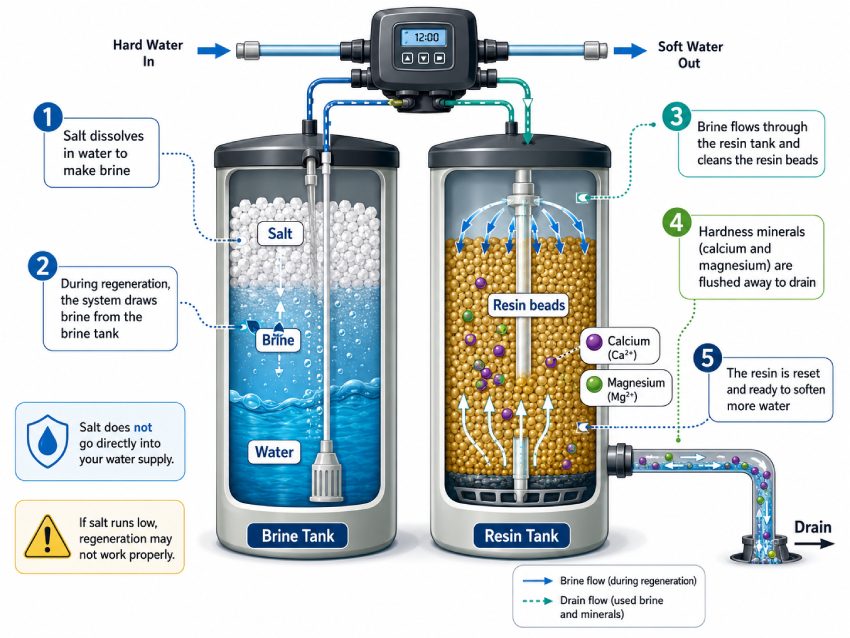
Salt is used to make brine. Brine is the salty water solution that helps regenerate the resin inside the softener.
A water softener does not pour salt directly into your water supply. Instead, the system draws brine from the brine tank during its cleaning cycle. The brine passes through the resin tank, clears hardness minerals from the resin, and sends that wastewater to drain.
After that cycle, the resin is ready to remove more calcium and magnesium.
That is why water softener salt maintenance matters. If the brine tank has enough salt, the softener can keep doing its job. If the tank runs low, the system may not regenerate correctly.
What Happens During Regeneration?
Regeneration is the cleaning cycle for the softener.
During normal use, hard water passes through resin beads. Those beads attract and hold calcium and magnesium. Once the beads reach capacity, the system needs to reset them.
During regeneration, the softener draws brine from the brine tank. The brine rinses the resin beads. That process releases hardness minerals from the resin and sends them to the drain.
Then the system rinses and returns to service.
Many systems regenerate at night or during low-use periods. Commercial systems may follow a different schedule based on water demand, equipment size, and the building’s use pattern.
A properly sized system with the right salt level can help reduce scale, protect equipment, and keep water quality steadier.
What Happens If the Salt Runs Low?
What happens if my water softener runs out of salt? The system may stop softening properly.
That can lead to:
- Hard water spots on dishes, glass, and fixtures
- Soap that does not lather well
- Scale buildup in plumbing and water heaters
- Stiff laundry and dull fabrics
- Dry skin or hair concerns
- More cleaning around sinks, showers, and appliances
For businesses, low salt can also create avoidable maintenance work. A restaurant may see more spotting on glassware. A property manager may hear more tenant complaints. A facility with boilers, water heaters, or laundry equipment may see more scale-related strain.
The softener cannot do its job without a steady salt supply. That is the simple part people forget until the water starts acting hard again.
How Much Salt Do I Need to Use in Water Softeners?
Salt use depends on water hardness, system size, water use, resin capacity, and regeneration settings.
There is no single number that fits every home or business. But there are useful ranges.
Many homes use about one 40-lb bag per month. Some use less. Larger households, harder water, or higher water use can increase that amount.
Commercial properties often need far more salt. A small office may use modest amounts. A restaurant, hotel, apartment complex, gym, or laundry operation may need regular bulk deliveries.
The best answer comes from checking actual usage over time. Track how quickly the tank level drops. Then set a delivery schedule that prevents low salt without overfilling the tank.
Residential Salt Usage
For residential water softeners, a common estimate is one 40-lb bag per month for an average family of four with moderately hard water.
Your home may use more salt if:
- You have very hard water
- More people live in the home
- You run more laundry
- You have larger tubs or high-flow showers
- Your system regenerates often
- Your softener is older or set incorrectly
Your home may use less salt if you have lower water use or a high-efficiency system.
Superior Water can help check your system settings and salt use. That matters because adding more salt is not the same as fixing the reason your system uses too much.
Commercial Salt Usage
Commercial salt usage depends on the building.
A 20-unit apartment building does not use water like a 200-room hotel. A small office does not use water like a restaurant with dishwashing all day. A gym with showers and laundry may need more salt than a retail store.
Commercial teams should look at:
- Daily water use
- Peak water times
- Number of fixtures
- Water heater load
- Laundry or dishwashing needs
- Tenant or customer usage
- System size and age
- Maintenance staff capacity
For facilities managers, the goal is not to guess. The goal is to prevent missed refills and reduce equipment strain.
A recurring salt delivery plan can help keep water treatment predictable. It also gives staff fewer small tasks to chase.
Types of Water Softener Salt
The main types of water softener salt include pellets, crystals, solar salt, and potassium chloride.
Each option works a little differently. The right choice depends on your water softener, water use, budget, and maintenance needs.
For many homes and businesses, salt pellets are a reliable choice because they dissolve cleanly and tend to reduce bridging. Some systems can use crystals or solar salt with no issue. Potassium chloride may fit certain needs, but it usually costs more.
Always check the system manufacturer’s recommendations before changing salt type. For high-use commercial water softeners, ask a water treatment company before switching. A small change in salt can create bigger maintenance problems when the system runs all day.
Salt Pellets
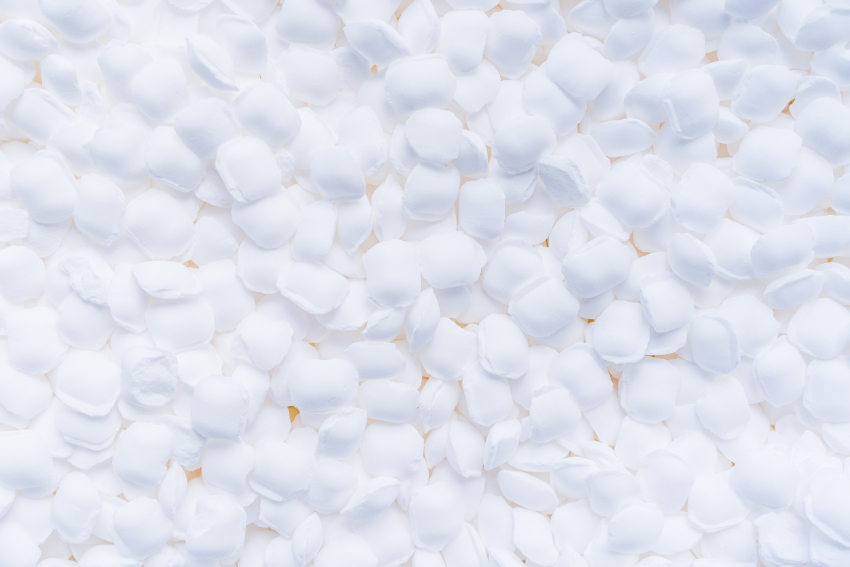
Salt pellets are one of the most common choices for water softeners.
They are compact, clean, and made to dissolve in brine tanks. Many pellets also help reduce salt bridging, which happens when salt forms a hard crust above the water level.
Pellets are often a strong fit for homes, offices, apartment buildings, restaurants, and other properties that need steady softener performance.
They may cost more than some crystal products, but they can reduce mess and help keep maintenance easier.
For many Superior Water customers, pellets offer a good balance of clean use, steady supply, and simple service.
Salt Crystals
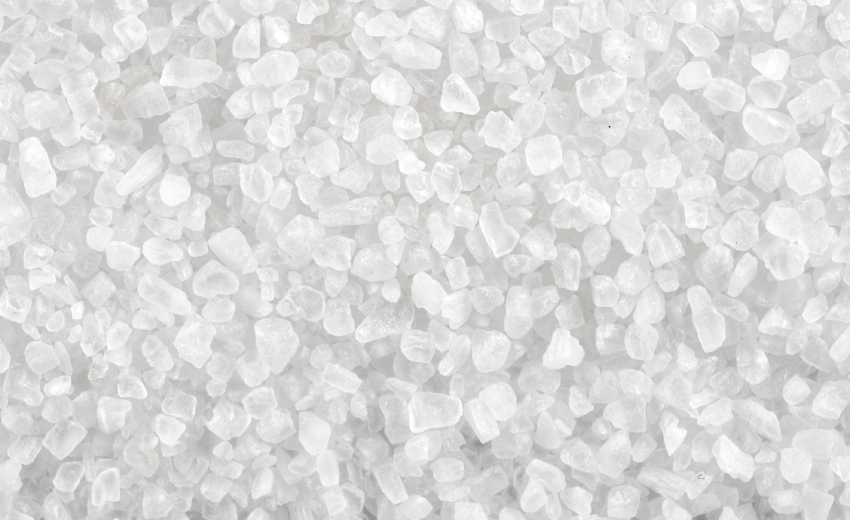
Salt crystals are another common option. They are usually made through mining or evaporation.
Crystals can work well in many systems, especially homes with normal water use. But they may be more likely to form bridges in some brine tanks. They can also leave more residue depending on purity.
If your water use is low or moderate, crystals may be fine. If your softener regenerates often, or if you manage a commercial property, pellets may be a better choice.
The real test is system performance. If your tank gets frequent buildup or salt clumps, it may be time to change the salt type.
Solar Salt
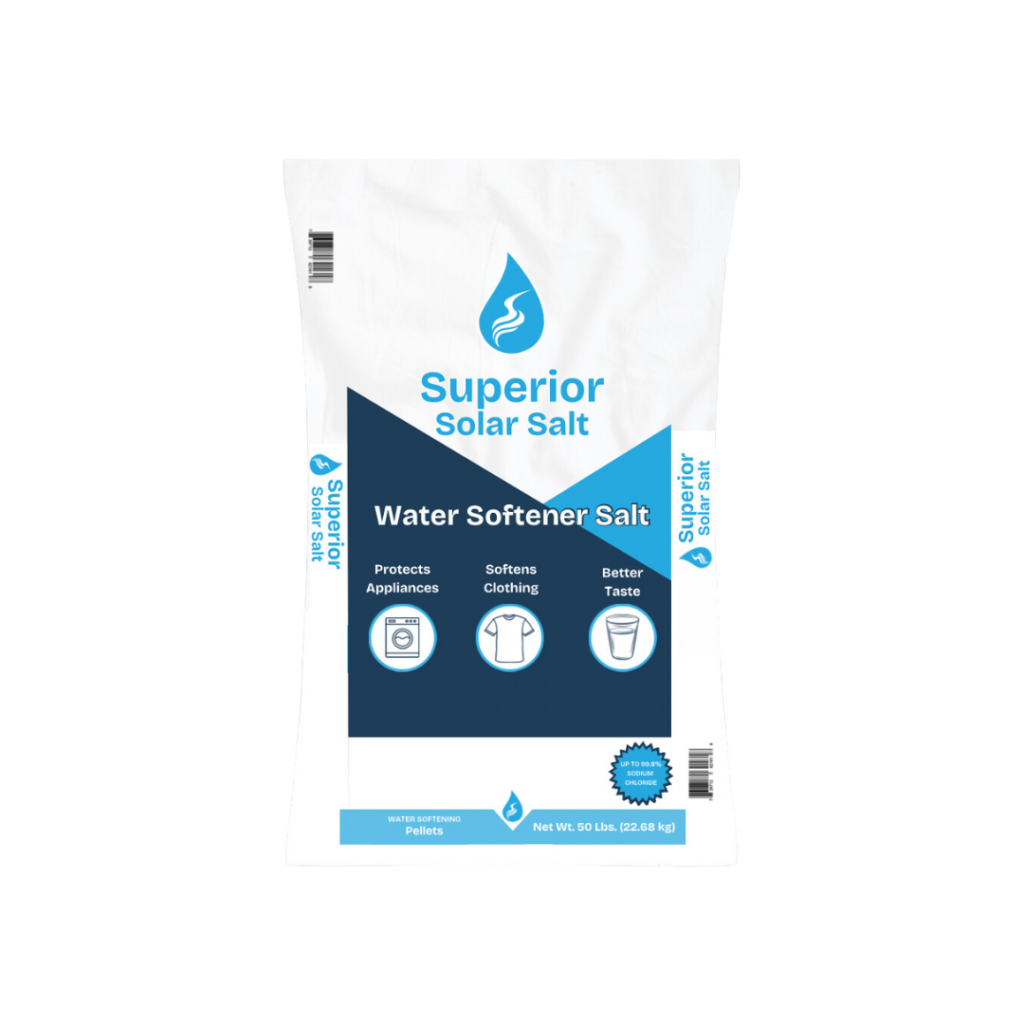
Solar salt is made by evaporating seawater or brine with the sun and wind. It usually comes in crystal or pellet form.
Solar salt is often cleaner than some mined rock salt. It can dissolve well, but the quality varies by product.
Solar salt can be a good choice for certain homes and light commercial settings. For higher-use commercial systems, check with a service technician before switching.
If a product leaves residue in the tank, creates clumps, or causes salt bridging, the upfront savings may not be worth it.
Potassium Chloride
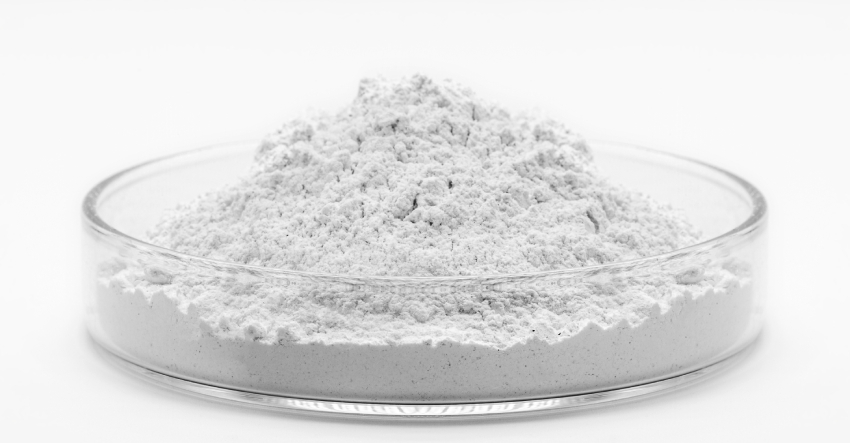
Potassium chloride is an alternative to sodium chloride.
Some people choose it because they want to reduce sodium discharge from the softener or avoid adding sodium during regeneration. It can work in many softeners, but it often costs more than salt.
Potassium chloride may also require system setting changes. If the settings stay the same, the softener may not regenerate as expected.
Do not switch to potassium chloride without checking your system manual or asking a water treatment company. That matters even more for commercial properties where water demand is high.
What Can Water Softener Salt Be Used In?
Water softener salt is made for water softeners. Its main job is to support the regeneration cycle that keeps the system removing hardness minerals.
That sounds basic, but it matters. Water softener salt uses are limited. The product belongs in a brine tank, not in random household or commercial uses.
In the right system, salt supports softer water for cleaning, plumbing protection, laundry, dishwashing, and equipment care. In the wrong use, it can create damage, mess, or safety problems.
Use the right product for the right job.
Common Water Softener Salt Use Cases
Common water softener salt use cases include:
- Residential water softeners
- Commercial water softeners
- Apartment and condo building softeners
- Restaurant water treatment systems
- Hotel and hospitality water systems
- Laundry facility water treatment
- Office building water softening systems
- Some industrial pretreatment setups
The purpose is the same in each case. Salt helps the system regenerate so it can keep reducing hardness.
For businesses, a steady salt supply can support better equipment performance, fewer scale issues, and more predictable maintenance.
That is why water softener salt delivery is useful for commercial teams. It turns a recurring task into a scheduled service.
What Not to Use Water Softener Salt For
Do not use water softener salt for food, cooking, pools, aquariums, medical uses, or ice melt unless the product label clearly says it is made for that purpose.
Water softener salt is not food-grade table salt. It may not meet the standards needed for eating or drinking uses outside the softener system.
You should also avoid using driveway salt in your softener. Ice melt products may contain additives that can harm the system or create residue in the tank.
If you are unsure, check the label or ask a water treatment company. Guessing with salt is how brine tanks become gross little science projects.
How Water Softener Salt Delivery Works
Water softener salt delivery keeps your brine tank supplied without store trips, lifting, or missed refills.
A simple delivery plan usually works like this:
- You contact Superior Water
- A team member reviews your system and water use
- You choose delivery frequency based on actual need
- Salt is delivered to your home or business
- The brine tank is filled as needed
- Your usage is tracked and adjusted over time
For commercial properties, the service can be set around building demand. That helps property managers and facilities teams keep water softeners supplied without pulling staff away from higher-priority work.
For homeowners, it removes the worst part of owning a softener: remembering the salt, buying the salt, loading the salt, carrying the salt, and then doing it again next month.
Superior Water can also help with water softener salt delivery and installation, softener checks, maintenance plans, and related water treatment services.
Water Softener Salt Maintenance and Troubleshooting
Water softener salt maintenance does not need to be complicated. It does need to be consistent.
Start by checking your brine tank at least once a month. Keep the salt level above the water level. Avoid letting the tank run empty. A good rule is to keep the tank at least one-quarter to one-third full while leaving room at the top.
Watch for these common problems:
- Salt bridge: A hard crust forms, and salt stops falling into the water
- Salt mush: Salt breaks down into sludge at the bottom of the tank
- Low salt: The system cannot make enough brine
- Dirty brine tank: Buildup affects brine flow
- High salt use: The system may be set incorrectly or regenerating too often
If hard water symptoms return even when the tank has salt, the issue may be settings, resin condition, water use changes, or a mechanical problem.
Superior Water installs and services water softeners with durable parts, including high-efficiency Clack valve systems and 10% crosslinked resin. That resin has 25% more crosslinking than standard 8% resin, which can support longer service life when the system is sized, installed, and maintained correctly.
FAQs About Water Softener Salt
How often should I add salt to my water softener?
Most homes need salt added about once a month, but usage depends on water hardness, household size, system size, and water use. A common estimate is about one 40-lb bag per month for an average family of four with moderately hard water.
How much salt should be in my brine tank?
Keep the salt level above the water level and avoid letting the tank get too low. A good rule is to keep the brine tank at least one-quarter to one-third full while leaving some room at the top so it does not overfill.
What happens if my water softener runs out of salt?
Your water softener may stop softening properly, which means hard water spots, soap residue, scale buildup, and dry skin issues can return. Salt helps regenerate the resin beads that remove hardness minerals from the water.
Does water softener salt actually soften the water?
No, the salt itself does not directly soften the water. Salt creates the brine used to regenerate the resin inside the softener, so the system can keep removing calcium and magnesium from the water.
Is water softener salt delivery worth it?
Yes, salt delivery is worth it if you want to avoid carrying heavy bags, missed refills, and inconsistent softener performance. For businesses and property managers, recurring delivery also helps reduce maintenance tasks and keeps water treatment more predictable.
Schedule Water Softener Salt Delivery in Indianapolis
If your softener needs salt, your schedule should not have to suffer for it.
Superior Water provides salt delivery for homeowners, commercial properties, apartment buildings, offices, restaurants, and other facilities in the Indianapolis area. The team can help you choose a delivery schedule based on your water use, tank size, and system needs.
You can also contact Superior Water for water treatment services, water softener service, system checks, and support with water softeners that need consistent salt and maintenance.
A planned salt delivery schedule can help reduce hard water issues, protect equipment, and save staff from another recurring task. That is useful at home. It is even more useful in a building where water quality affects tenants, customers, cleaning, and equipment.